TOPIK Exam Guide: Levels Schedule and Study Tips

TOPIK Exam Guide: Levels Schedule and Study Tips
Planning to study in South Korea? Whether you want to enroll at top institutions like Seoul National University or Yonsei, mastering Korean is crucial. The Test of Proficiency in Korean (TOPIK) is the official, state-run exam designed to assess the language abilities of non-native speakers.
For international students, TOPIK is a practical necessity. Most Korean universities require Level 3 or 4 for undergraduate programs, and Level 4 or higher for graduate studies. A solid TOPIK score also boosts your chances of securing scholarships, like the Global Korea Scholarship (GKS), and simplifies obtaining your D-2 student visa or transitioning to work visas (like D-10 or F-2-7) later.
1. TOPIK Levels Demystified: TOPIK I vs. TOPIK II
The TOPIK exam is divided into two main test types: TOPIK I (beginner) and TOPIK II (intermediate/advanced). Your final score determines your specific sub-level, ranging from Level 1 to Level 6.
Understanding the differences is critical for choosing the right exam to register for:
| Exam Type | Level | Required Score | Language Proficiency Description | Academic & Visa Relevance |
|---|---|---|---|---|
| TOPIK I | Level 1 | 80+ points | Basic conversations (greetings, simple shopping). | Exchange students. |
| TOPIK I | Level 2 | 140+ points | Simple expressions on familiar topics (hobbies). | Required for some vocational courses. |
| TOPIK II | Level 3 | 120+ points | Basic social functions and public facility usage. | Entry level for undergraduate majors. |
| TOPIK II | Level 4 | 150+ points | Understands news, social issues, and academic tasks. | Required for graduation from most universities. |
| TOPIK II | Level 5 | 190+ points | Fluent usage in professional and economic fields. | Highly competitive for scholarship perks. |
| TOPIK II | Level 6 | 230+ points | Native-like fluency in academic settings. | Top-tier academic research and executive jobs. |
While TOPIK I is great for beginners, serious prospective university students should aim directly for TOPIK II, targeting at least Level 3 or 4 to meet academic prerequisites.
2. Test Structure, Passing Scores, and Registration Costs
The two exam papers differ significantly in terms of duration, sections, and difficulty. TOPIK I focuses solely on receptive skills, while TOPIK II introduces a challenging productive writing section that acts as a major filter for higher grades.
| Exam Details | TOPIK I (Beginner) | TOPIK II (Intermediate / Advanced) |
|---|---|---|
| Sections Tested | Listening (40 mins), Reading (60 mins) | Listening (60 mins), Writing (50 mins), Reading (70 mins) |
| Number of Questions | 70 Multiple-choice questions | 104 Questions (100 MCQ, 4 Essay/Short Answer) |
| Total Score | Max 200 points | Max 300 points |
| Test Duration | 100 minutes (No break) | 180 minutes (2 sessions with break) |
| Cost in South Korea | 40,000 KRW (~30 USD) | 55,000 KRW (~42 USD) |
Note: Registration fees outside of South Korea vary depending on the local hosting institution, typically ranging from $40 to $80 USD. Check your local Korean Embassy website for precise rates.
3. The Official TOPIK Exam Schedule and Timelines
The National Institute for International Education (NIIED) administers paper-based TOPIK exams six times a year in South Korea (usually January, April, May, July, October, November). Abroad, it is offered three to four times yearly.
Planning your application timeline is key to a smooth university admission process:
- Registration Window: Registration opens roughly two to three months before the actual test date. In South Korea, slots fill up within minutes of opening, so prepare your passport details in advance.
- Results Release: Results are published online four to five weeks after the exam date.
- Validity Period: A TOPIK score certificate is valid for exactly two years from the date of the results announcement. Make sure your score does not expire before your university's application deadline.
- The IBT TOPIK: South Korea is gradually expanding the Internet-Based Test (IBT) version of TOPIK. IBT offers quicker result turnarounds than the traditional paper test.
4. Strategic Study Tips for TOPIK Success
Acing TOPIK requires a blend of language skills and smart test-taking strategy. Here are the top methods successful KR Campus students use:
- Master the Past Papers (기출문제): Solve at least 5 to 10 past exams under timed conditions to familiarize yourself with the question patterns and pacing. This is the most critical strategy.
- Target Question 53 (TOPIK II Writing): The writing section of TOPIK II is difficult, but Question 53 is highly structured. It requires you to describe a graph in 200–300 characters. Memorize templates for trends and comparisons to secure points.
- Acquire Vocabulary Systematically: Focus on Hanja-based words (Sino-Korean vocabulary). Over 60% of advanced Korean words derive from Chinese characters. Recognizing key roots will help you guess the meaning of unfamiliar words on the reading section.
- Optimize Your Reading Strategy: On TOPIK II Reading, do not read the passages word-for-word if you are short on time. Learn to skim for main ideas and answer the easier questions (typically questions 1-25) first.
- Use Free Online Resources: Leverage Study TOPIK platforms, the official TOPIK website, and mock exam apps. Consistent daily practice of 30 minutes is better than cramming.
5. Navigating Your University Application and Visa Process
Once you have your TOPIK results, you must synchronize them with your university and visa application timeline:
- The University Application Phase: Most South Korean universities open their Spring semester admissions in September/October of the previous year, and Fall semester admissions in March/April. You must upload your valid TOPIK certificate to the university portal during this period.
- Visa Issuance (D-2 Visa): After receiving your Certificate of Admission (COA) from the university, you will apply for your D-2 visa at the Korean embassy in your home country. Your TOPIK score acts as primary evidence of language proficiency, making your visa approval much smoother.
- Language Course Pathways: If you cannot reach TOPIK Level 3 or 4 before your desired semester, consider enrolling in a university-affiliated Korean Language Institute (KLI) on a D-4 visa first. Most KLIs offer intensive training programs designed to transition you directly to a degree program once you pass the target TOPIK level.
With your certificate in hand, you are well on your way to experiencing the vibrant life of an international student in South Korea!
Sources & how to verify
Before you apply or pay fees, confirm details on official pages. Useful starting points:
- Study in Korea (NIIED) — scholarships and study pathways
- Korea Immigration Service — visas, ARC, stay rules
- Korea.net — government overview pages for newcomers
- Your school’s official international student office pages for tuition and admission dates
Editorial note (KR Campus): We revise guides when policies change. If something looks outdated, contact us with a source link and we will review it.
Editorial note & sources
This guide is compiled from public and official information for international students. Visas, fees, and rules change — confirm details on official sites before you apply. Contact us if you spot an error.
Related study abroad guides
Was this page helpful?
Your feedback helps us improve our guides
Related Schools
 Language School
Seoul National University of Science and Technology Korean Language Center
 University
Sungshin Women's University
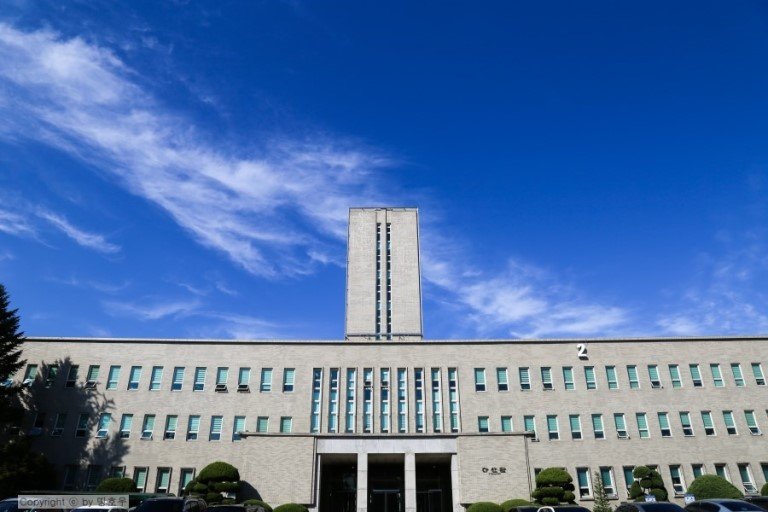 University
Seoul National University of Science and Technology
 University



![[2026] Eat Well for Under $11/Day: Korean Food for Students | KR Campus](https://images.unsplash.com/photo-1473496169904-658ba7c44d8a?w=500)