Language School to University: Korean Admission Pathway

Language School to University Pathway: Planning Your Admission Timeline
For many international students, the dream of obtaining a degree from a top-tier South Korean university begins not in a standard lecture hall, but in a Korean Language Institute (KLI). Known as the "Language School to University Pathway," this route is one of the most reliable ways to secure admission to undergraduate or graduate programs in South Korea. It bridges the linguistic and cultural gap, ensuring you have the necessary academic Korean skills before diving into a rigorous degree program. In this KR Campus guide, we will break down the ideal 1-to-2-year pathway, explore critical TOPIK milestones, analyze visa transitions, and provide practical tips to make your academic transition seamless.
1. The Korean Language School to University Pathway: An Overview
Many universities in South Korea offer intensive language programs through their affiliated language centers. These programs are designed specifically for academic preparation. Rather than just teaching conversational Korean, they prepare you for the reading, writing, and presentation skills required in higher education.
Opting for this pathway offers unique advantages:
* Conditional Admission: Some universities allow students to apply for an undergraduate program with the condition that they complete a specific level (usually Level 3 or 4) at the university's language school before starting their degree.
* On-Campus Integration: Studying at a university’s KLI allows you to live in dorms, use campus libraries, and familiarize yourself with Korean campus life before your official degree program begins.
* Direct Support: Language schools have dedicated international offices that assist students with visa renewals, health insurance, and local orientation.
2. The 1-to-2-Year Timeline and TOPIK Milestones
A standard Korean language program is divided into four 10-week terms per year: Spring, Summer, Fall, and Winter. Each term represents one proficiency level. Starting from absolute beginner (Level 1), it takes approximately one year of dedicated study to reach Level 4, which is the baseline requirement for most English-Korean taught majors.
To successfully transition to a degree program, you must align your language studies with the Test of Proficiency in Korean (TOPIK) exam dates. Most universities require TOPIK Level 3 or 4 for admission.
Below is the typical timeline for an absolute beginner aiming for undergraduate admission over a 1.5-year period.
| Stage (Quarter) | KLI Level | Target TOPIK Level | Key Academic Milestones |
|---|---|---|---|
| Quarter 1 (Months 1–3) | Level 1 | None | Learn Hangul, basic vocabulary, and grammar. |
| Quarter 2 (Months 4–6) | Level 2 | TOPIK I (Level 2) | Register for your first official TOPIK exam. |
| Quarter 3 (Months 7–9) | Level 3 | TOPIK II (Level 3) | Eligible for conditional admission at some universities. |
| Quarter 4 (Months 10–12) | Level 4 | TOPIK II (Level 4) | Apply for undergraduate programs; standard admission requirement met. |
| Quarter 5 (Months 13–15) | Level 5 (Optional) | TOPIK II (Level 5) | Highly recommended for competitive majors and scholarships. |
3. Comparing Visa Requirements (D-4 vs. D-2)
To study at a Korean language school, you will enter the country on a D-4-1 (General Trainee) visa. Once accepted into a degree program, you must transition to a D-2 (Student) visa. Navigating this change of status is highly dependent on your attendance records and financial solvency.
Maintaining your D-4-1 visa requires strict adherence to attendance policies. Most universities require at least 80% attendance to pass a level and renew the visa. Falling below this threshold can result in visa cancellation or denial of extension.
| Feature | D-4-1 (General Trainee Visa) | D-2 (Degree Student Visa) |
|---|---|---|
| Primary Purpose | Korean language study at a university KLI. | Undergraduate, graduate, or research program. |
| Typical Validity | 6 months (extendable up to 2 years maximum). | 1 to 2 years (extendable for duration of degree). |
| Part-Time Work | Allowed after 6 months; up to 20 hours/week. | Allowed immediately; 20-30 hours/week depending on GPA. |
| Financial Proof | Approx. $10,000 USD (depends on city). | Approx. $20,000 USD (higher for metropolitan schools). |
| TOPIK Requirement | None required for initial entry. | TOPIK Level 3+ (often Level 4 for Humanities). |
4. Financial Planning: Tuition, Living Expenses, and Scholarships
Financing your pathway requires looking at both the short-term language school phase and the long-term degree phase. Tuition for KLIs is billed per 10-week term, whereas university tuition is billed per semester (twice a year).
- Language School Costs: Expect to pay between 1,300,000 KRW and 1,800,000 KRW per 10-week term. This brings the annual tuition to roughly 5,200,000 KRW to 7,200,000 KRW ($3,900 to $5,400 USD).
- Degree Tuition Costs: Undergraduate tuition ranges from 3,000,000 KRW to 6,500,000 KRW per semester, with humanities being the least expensive and medical/engineering fields being the highest.
- Living Expenses: Budget about 800,000 KRW to 1,200,000 KRW per month for rent (gosiwon, dormitory, or studio), food, health insurance, and public transportation.
The good news is that high performance in language school and a solid TOPIK score can unlock massive scholarships. Most Korean universities offer tuition waivers ranging from 30% to 100% for international freshmen who hold a TOPIK Level 4 or higher.
5. Step-by-Step Transition Strategy: Language School to Degree Program
To avoid gaps in your visa or enrollment status, you must begin planning your university application at least 6 months before you finish your language course.
- Monitor University Deadlines: Korean universities have two main admission intakes: Spring (March) and Fall (September). If you want to start in March, you must submit your application dossier between September and October of the previous year.
- Gather Official Documents Early: Do not wait until you are in Korea to request apostilled high school diplomas or birth certificates. Have these verified documents in hand before leaving your home country.
- Take the TOPIK Exam in Advance: TOPIK results take about 4 to 5 weeks to be published. Calculate your target test dates carefully so your scores are available by the university application deadline.
- Submit the Visa Change (D-4 to D-2): Once you receive your Certificate of Admission (COA) from your new university, book an appointment at the local South Korean Immigration Office. You can easily apply for a change of status without leaving the country, provided your D-4 visa and school attendance are in good standing.
By systematically planning your language goals, maintaining high attendance, and tracking deadlines, you will set yourself up for academic success in South Korea. KR Campus is here to support you at every milestone of your Korean educational journey!
Editorial note & sources
This guide is compiled from public and official information for international students. Visas, fees, and rules change — confirm details on official sites before you apply. Contact us if you spot an error.
Related study abroad guides
Was this page helpful?
Your feedback helps us improve our guides
Related Schools
 Language School
Seoul National University of Science and Technology Korean Language Center
 University
Sungshin Women's University
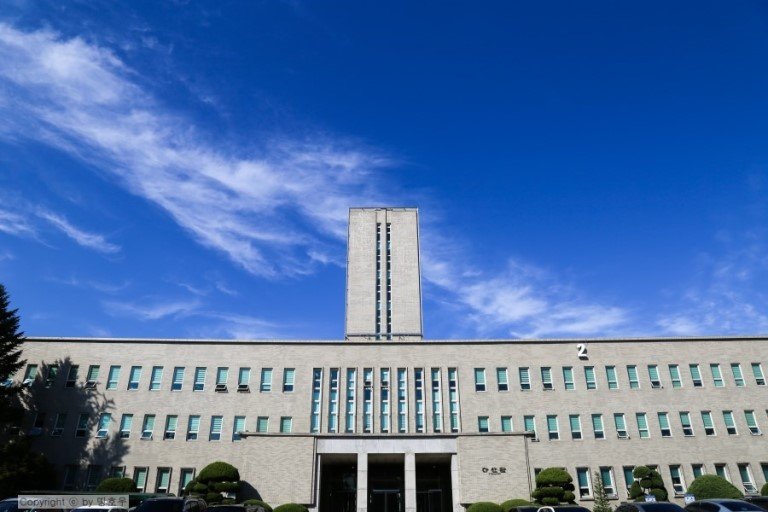 University
Seoul National University of Science and Technology
 University
Hansung University
Related Guides
 Visa
Visa
D-4 to D-2 Visa Change in Korea (2026): Avoid Costly Mistakes
 Selection
Korea's Top Engineering Universities 2026: Full Rankings Guide
![[2026] Eat Well for Under $11/Day: Korean Food for Students | KR Campus](https://images.unsplash.com/photo-1473496169904-658ba7c44d8a?w=500) Life
Life
[2026] Eat Well for Under $11/Day: Korean Food for Students | KR Campus
 Settlement