Student Housing in Korea 2026: Dorm vs Goshiwon vs Apartment Costs
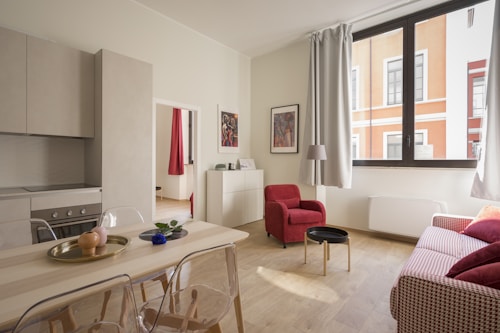
Quick answer: Dorms run 350,000–800,000 KRW/month with utilities included, goshiwons offer flexible month-to-month deals, and one-room apartments give the most privacy but need a deposit. Here's how to pick the right fit for your budget and lifestyle.
Student Housing in Korea: Dorm Goshiwon vs Apartment
Introduction: Finding Your Home in South Korea
Landing in South Korea as an international student is an exciting milestone. Between organizing your student visa (D-2 or D-4), enrolling in classes, and packing your bags, choosing where to live will define your daily life. The Korean student housing market offers distinct options: university-managed dorms, tiny private rooms (goshiwon), and independent studio apartments (one-rooms). Each option has its own financial structures, lifestyle rules, and cultural environments. This guide from KR Campus will walk you through the pros, cons, costs, and key considerations for each option to help you make the best decision for your stay.
1. University Dormitories: On-Campus Convenience
For most incoming international students, the university dormitory (Gisuksa, 기숙사) is the go-to choice. Located directly on or near campus, they offer an unparalleled location for walking to class.
* Costs: Generally 350,000 KRW to 800,000 KRW per month, paid upfront per semester (4 months).
* Room Types: Mostly shared rooms (double or quadruple occupancy); single rooms are rare and competitive.
* Key Rules: Strict curfews are common (e.g., doors lock from 12:00 AM to 5:00 AM), gender segregation by building or floor is strictly enforced, and cooking in rooms is prohibited.
Dorms offer a built-in community. You will live alongside local and exchange students, making it easy to socialize. Utilities (Wi-Fi, water, heating) are included in the price, and buildings feature gyms, study rooms, and cafeterias. However, the lack of privacy, strict rules, and competitive application processes can be limiting. Additionally, universities rarely guarantee housing for your entire degree duration.
2. Goshiwon and Goshitel: The Ultra-Budget Solo Option
A goshiwon (고시원), often called a goshitel or one-tel, is a uniquely Korean micro-housing option. Originally built for students studying for state exams, they are now a popular, budget-friendly choice for single students.
* Costs: 250,000 KRW to 550,000 KRW per month with zero or minimal deposit (around 50,000 KRW).
* Room Layout: Tiny spaces (5 to 10 square meters) featuring a bed, desk, mini-fridge, and sometimes a private micro-bathroom.
* Perks: Free kitchen staples like rice, kimchi, instant ramen, and coffee are typically provided by the management.
Goshiwons are rented on a flexible, month-to-month basis, making them perfect for short-term language school students. There are no utility bills or long lease commitments. The downsides are the cramped quarters, thin walls, and lack of social interaction, as residents maintain a quiet, solitary lifestyle.
3. Private Apartments (One-Rooms): Independent Living
If you value complete independence, a "one-room" (원룸, a studio apartment) is the gold standard. This is the preferred choice for long-term undergraduate or graduate students on D-2 visas.
* Costs: Monthly rent ranges from 450,000 KRW to 850,000 KRW, but you must pay a large deposit (Wolse system), ranging from 3,000,000 KRW to 10,000,000 KRW.
* Lease Term: Usually requires a firm 1-year or 2-year contract.
* Utilities: Paid separately (electricity, gas, water, and building maintenance fees, totaling 100,000 KRW to 200,000 KRW extra per month).
Living in a one-room provides a private kitchen, bathroom, and washing machine. You can host friends, cook freely, and live without curfews. However, finding a one-room requires working with a Korean realtor (budongsan), which demands basic language skills. You must also set up utilities and manage trash sorting, which is strictly regulated.
| Financial Factor | Dormitory | Goshiwon | Private Apartment (One-Room) |
|---|---|---|---|
| Deposit | None or small | None (or <100,000 KRW) | 3,000,000 to 10,000,000 KRW |
| Monthly Cost | 350k - 800k KRW | 250k - 550k KRW | 450k - 850k KRW + utilities |
| Contract | 1 semester (4 months) | Month-to-month | 1 to 2 years |
| Utilities | Included | Included | Paid separately |
4. Head-to-Head Housing Comparison
Choosing between these three options depends on your lifestyle preferences, budget, and length of stay. If you are on a tight budget and want instant privacy with zero deposit, go for a modern goshitel. If you prefer a structured social environment and do not mind sharing space, choose the dorm. If you have the capital for a large deposit and plan to live in Korea long-term, renting a private one-room offers the highest quality of life.
| Feature | Dormitory | Goshiwon | Private Apartment (One-Room) |
|---|---|---|---|
| Privacy | Low (shared spaces) | Medium (thin walls) | High (fully private space) |
| Social Life | High (easy to meet peers) | Low (quiet culture) | Medium (up to you to host) |
| Curfew | Yes (12 AM - 5 AM) | No | No |
| Cooking | Shared or none | Shared (free basic food) | Private kitchen |
| Maintenance | School handled | Landlord handled | Tenant handled |
5. KR Campus Pro-Tips for House Hunting
Before committing to any housing contract in South Korea, keep these essential practical tips in mind to protect your funds and ensure a smooth stay:
* Register Your Address: Under Korean law, you must report your address change to the immigration office within 14 days of moving. Failing to do so results in steep fines.
* Secure Your Deposit: If renting an apartment, visit your local community center (haengjeong-bokji-center) on your move-in day. Apply for a "fixed date" (hwakjeong-ilja) and register your residence (jeonip-singo) to legally protect your deposit if the building faces foreclosure.
* Factor in Heating Costs: Korean floor heating (ondol) runs on gas. In winter, running the heater continuously can lead to gas bills exceeding 150,000 KRW. Use the "out-of-home" (oechul) setting to save energy.
* Inspect Everything First: Take detailed photos of any pre-existing damage, wall stains, or faulty appliances before moving your things in. Send these to your landlord immediately to prevent unfair claims when you move out.
Finding the right place to live is critical to enjoying your life as an international student in South Korea. Start your search early—especially during peak seasons in February and August—to secure the perfect base for your studies!
Sources & how to verify
Before you apply or pay fees, confirm details on official pages. Useful starting points:
- Study in Korea (NIIED) — scholarships and study pathways
- Korea Immigration Service — visas, ARC, stay rules
- Korea.net — government overview pages for newcomers
- Your school’s official international student office pages for tuition and admission dates
Editorial note (KR Campus): We revise guides when policies change. If something looks outdated, contact us with a source link and we will review it.
Editorial note & sources
This guide is compiled from public and official information for international students. Visas, fees, and rules change — confirm details on official sites before you apply. Contact us if you spot an error.
Related study abroad guides
Was this page helpful?
Your feedback helps us improve our guides
Related Schools
 Language School
Seoul National University of Science and Technology Korean Language Center
 University
Sungshin Women's University
 University
Seoul National University of Science and Technology
 University
Hansung University
Related Guides
 Visa
Visa
D-4 to D-2 Visa Change in Korea (2026): Avoid Costly Mistakes
 Selection
Korea's Top Engineering Universities 2026: Full Rankings Guide
![[2026] Eat Well for Under $11/Day: Korean Food for Students | KR Campus](https://images.unsplash.com/photo-1473496169904-658ba7c44d8a?w=500) Life
Life
[2026] Eat Well for Under $11/Day: Korean Food for Students | KR Campus
 Settlement