GKS (KGSP) Scholarship Guide for Korea

GKS (KGSP) Scholarship Guide for Korea
Introduction to the Global Korea Scholarship (GKS)
Are you dreaming of studying in South Korea but worried about tuition fees and living expenses? The Global Korea Scholarship (GKS), formerly known as the Korean Government Scholarship Program (KGSP), is your ultimate golden ticket. Funded by the National Institute for International Education (NIIED) under the Ministry of Education, this prestigious award covers everything from your round-trip airfare and full tuition to monthly living stipends, settlement allowances, and medical insurance. It is one of the most generous fully-funded scholarship programs in the world, designed to foster international exchange and strengthen friendships.
Each year, thousands of international students embark on their academic journeys at South Korea's top-tier universities through GKS. In this KR Campus guide, we will break down the essential details you need to secure this scholarship.
Track Options: Embassy vs. University Track
To apply for the GKS, you must choose between two distinct application pathways: the Embassy Track and the University Track. You cannot apply through both simultaneously; doing so will result in instant disqualification.
The Embassy Track allows you to apply through the Korean Embassy in your home country. This track is highly competitive but offers the advantage of choice: you can select up to three different universities from the designated list.
The University Track requires you to apply directly to a single Korean university. This path is often preferred by students with a clear, specific research goal. While you only get one choice of university, the selection process is more direct, as you bypass the embassy stage.
| Feature | Embassy Track | University Track |
|---|---|---|
| Application Venue | Korean Embassy | Direct to university |
| Number of Choices | Up to 3 universities | Only 1 university |
| Quota Distribution | Country quotas | University quotas |
| Selection Rounds | 3 rounds | 2 rounds |
| Best Suited For | Students wanting flexibility | Students with a single target |
Academic Degrees & Language Training Year
The GKS caters to both undergraduate and graduate applicants. A unique and highly beneficial aspect of this program is the mandatory one-year Korean language training course. This program ensures that all scholarship holders possess the linguistic skills needed to thrive.
If you already hold a TOPIK (Test of Proficiency in Korean) Level 5 or 6, you are exempt from this language year. For others, you will study at a designated language institution for one year before moving to your main campus.
| Degree Level | Language Prep | Degree Course | Total Duration | Key Eligibility Criteria |
|---|---|---|---|---|
| Associate | 1 Year | 2-3 Years | 3-4 Years | High school graduate under 25 |
| Bachelor's | 1 Year | 4 Years | 5 Years | High school graduate under 25 |
| Master's | 1 Year | 2 Years | 3 Years | Bachelor's holder under 40 |
| Doctoral | 1 Year | 3 Years | 4 Years | Master's holder under 40 |
| Research | None | 6 Months - 1 Year | 6 Months - 1 Year | Invited researchers under 40 |
Key Eligibility & Required Documents
To be considered for the GKS, you must meet strict eligibility criteria. The most critical requirements relate to nationality, age, and academic performance.
- Nationality: Both you and your parents must be citizens of an eligible country. Dual citizens holding Korean citizenship are not eligible.
- GPA: Your Cumulative Grade Point Average (CGPA) must be above 80% on a 100-point scale, or rank in the top 20% of your class.
- Health: You must be in good physical and mental health to sustain your studies in Korea.
- Age: Undergraduates must be under 25, while graduates must be under 40.
Preparing your document portfolio is the most time-consuming part of the process. You must ensure all official academic documents are either apostilled or consular-confirmed by the Korean Embassy. Essential documents include:
- Application Form: Completed with personal details.
- Personal Statement (SOP): Explaining your background and motivation.
- Study Plan: Detailing academic goals and future plans.
- Recommendation Letters: Typically two letters from mentors.
- Transcripts & Graduation Certificates: Proof of academic standing.
- Proof of Citizenship: Passports or birth certificates.
- Optional Certificates: Language proficiency tests like TOPIK, TOEFL, or IELTS.
Application Timeline & Practical Tips for Success
The GKS application timeline operates on two separate schedules: undergraduate and graduate. Undergraduate applications open around September/October, while graduate applications open around February/March.
Here is a breakdown of the typical timeline:
* Announcement of Guidelines: Undergraduate (September) / Graduate (February)
* First Round Selection: Undergraduate (Oct-Nov) / Graduate (Mar-Apr)
* Second Round (NIIED): Undergraduate (Dec) / Graduate (May)
* Third Round (Embassy): Undergraduate (Jan) / Graduate (Jun)
* Final Results & Visa Prep: Undergraduate (Jan-Feb) / Graduate (Jun-Jul)
* Arrival in Korea: Undergraduate (Late Feb) / Graduate (Late Aug)
Visa & Arrival Practicalities
Once selected, you must apply for a visa. Usually, you will start with a D-4 visa (General Student Visa) for your language training year. After completing the language course and meeting transition requirements, you will transition to a D-2 visa (Student Visa) for your degree program. NIIED coordinates with the Korean Ministry of Justice to streamline this process.
Top Tips for a Winning GKS Application
- Tell a Cohesive Story: Your personal statement and study plan must align. Focus on South Korea’s academic excellence and industry leadership.
- Acquire Language Scores Early: Having even a basic TOPIK Level 3 or an English score like IELTS 6.5 can give you a massive edge.
- Secure Strong Recommendations: Choose referees who know your academic potential intimately, rather than famous names who cannot write personal endorsements.
Conclusion
Securing the Global Korea Scholarship requires dedication, meticulous planning, and a polished presentation of your academic potential. It is more than just a financial grant; it is an invitation to immerse yourself in South Korea's vibrant culture, cutting-edge technology, and world-class education system. By choosing the right track, preparing your documents early, and crafting an authentic narrative, you can turn your dream of studying in Korea into a reality. Keep this KR Campus guide handy as you prepare your application, and get ready to take your first steps toward an extraordinary academic adventure in South Korea!
Editorial note & sources
This guide is compiled from public and official information for international students. Visas, fees, and rules change — confirm details on official sites before you apply. Contact us if you spot an error.
Related study abroad guides
Was this page helpful?
Your feedback helps us improve our guides
Related Schools
 University
Sungshin Women's University
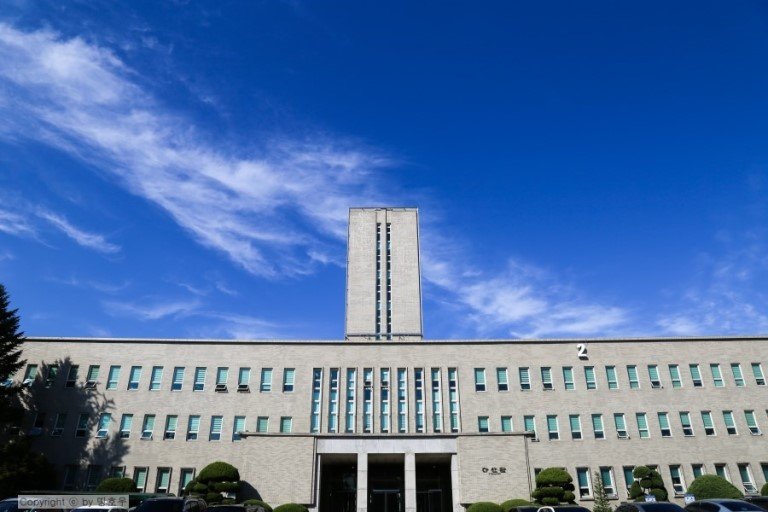 University
Seoul National University of Science and Technology
 University
Hansung University
 University
Dongduk Women's University
Related Guides
 Visa
Visa
D-4 to D-2 Visa Change in Korea (2026): Avoid Costly Mistakes
 Selection
Korea's Top Engineering Universities 2026: Full Rankings Guide
![[2026] Eat Well for Under $11/Day: Korean Food for Students | KR Campus](https://images.unsplash.com/photo-1473496169904-658ba7c44d8a?w=500) Life
Life
[2026] Eat Well for Under $11/Day: Korean Food for Students | KR Campus
 Settlement